Best Soldering Stations and Tools for Robotics Electronics in 2026

ContentsWhat Actually Matters in a Soldering Iron
- What Actually Matters in a Soldering Iron
- 1. Best Budget Pick: Adjustable Temperature Iron
- 2. Best All-Rounder: Digital Soldering Station
- 3. Best for Small Components: Hot Air Rework Station
- 4. Essential Accessory: Helping Hands / PCB Holder
- 5. Essential Accessory: Wire Strippers and Crimping Tool
- 6. Worth Having: Fume Extractor
- 7. Consumables Worth Stocking Up On
- FAQ
Almost every robotics project eventually requires soldering — connecting wires to a motor driver, attaching headers to a sensor board, or repairing a broken connection mid-build. Yet soldering tools are an area where it's easy to either overspend on equipment you don't need or, more commonly, underspend on a cheap iron that makes every solder joint a frustrating struggle. This guide covers what's actually worth buying.
Some articles include recommended robotics gear. We only suggest products we genuinely believe are useful.
What Actually Matters in a Soldering Iron
- Temperature control: a fixed-temperature iron (common in the cheapest options) makes it hard to solder both delicate small components and thicker wire gauges well. Adjustable temperature is worth prioritizing even on a budget.
- Recovery time: how quickly the tip returns to temperature after contact with a joint. Cheap irons with poor recovery time make multi-joint work (like populating a row of header pins) noticeably slower and more error-prone.
- Tip variety and replaceability: different jobs (fine pin headers vs. thicker power wires) benefit from different tip shapes. A system with cheap, available replacement tips lasts much longer than one where tips are hard to source.
1. Best Budget Pick: Adjustable Temperature Iron
A basic adjustable-temperature soldering iron with interchangeable tips covers the vast majority of beginner robotics soldering — headers, wire splices, basic board repairs — without a major investment. This is the right starting point for most hobbyists.
2. Best All-Rounder: Digital Soldering Station
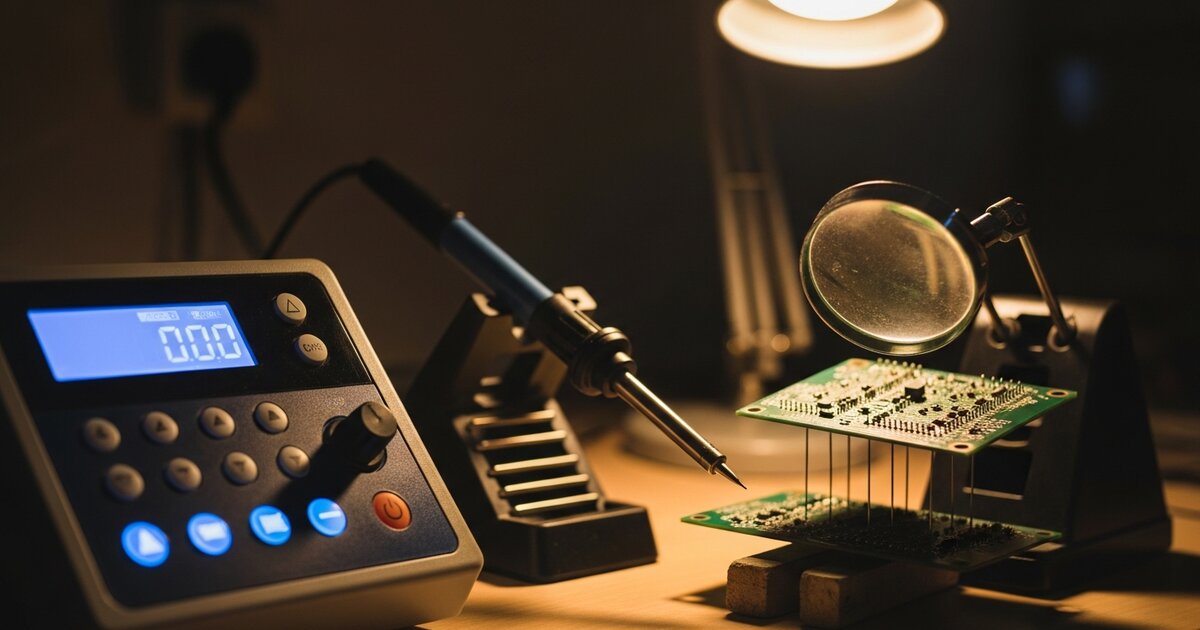
A proper soldering station (separate base unit with digital temperature readout, often with a stand and sponge/brass wool tip cleaner included) offers more consistent temperature control and faster recovery than a basic pen-style iron, making repetitive work meaningfully less tedious.
3. Best for Small Components: Hot Air Rework Station
Some robotics work — reflowing surface-mount components, removing multi-pin connectors without damaging the board, or working with certain sensor breakout boards — benefits from hot air rather than a soldering iron tip alone. A combined soldering iron + hot air station covers both needs in one unit.
4. Essential Accessory: Helping Hands / PCB Holder
A "helping hands" tool (a base with adjustable arms and alligator clips, sometimes with a magnifying glass) or a dedicated PCB holder makes a genuine difference in solder joint quality, simply by freeing both hands to hold the iron and solder rather than also trying to hold the board steady.
5. Essential Accessory: Wire Strippers and Crimping Tool
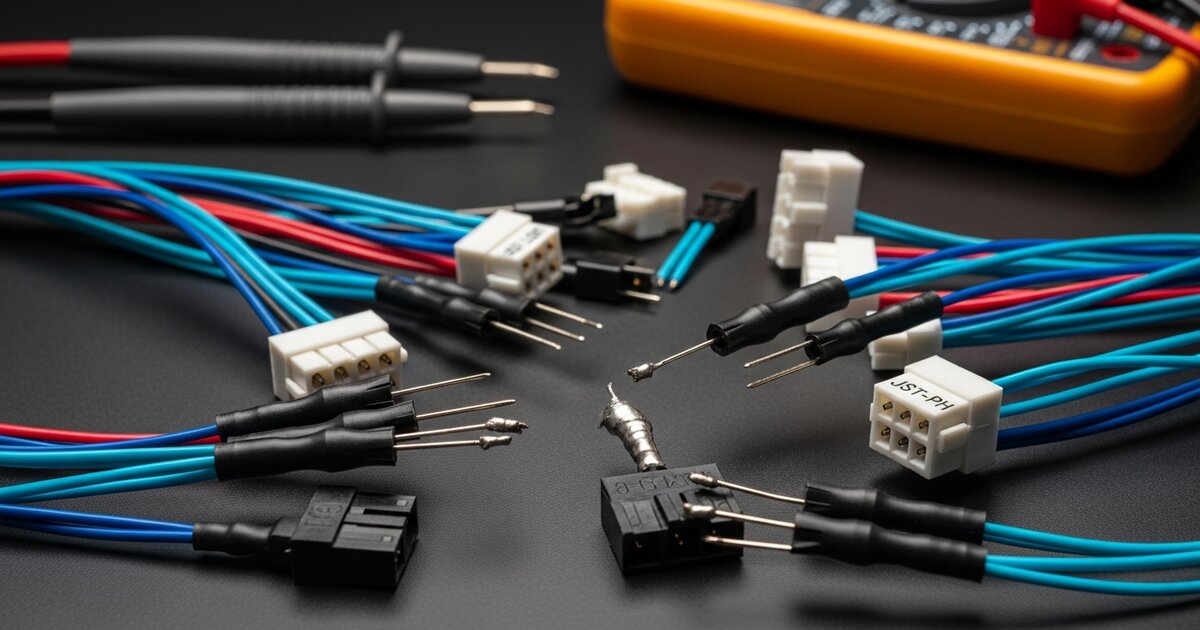
Robotics wiring involves constant stripping, crimping, and connector work (see our wiring and connectors guide) — a decent self-adjusting wire stripper and a crimping tool rated for the connector types you're using (JST, Dupont, etc.) pay for themselves quickly in saved time and fewer ruined wire ends.
6. Worth Having: Fume Extractor
Solder fumes aren't something to ignore, especially with extended soldering sessions. A small benchtop fume extractor (or even a basic fan setup venting away from your face) is a low-cost addition that matters for anyone soldering regularly.
7. Consumables Worth Stocking Up On
- Solder: a reasonable diameter (around 0.6–0.8mm) with rosin core suits most robotics electronics work.
- Flux: extra flux beyond what's in rosin-core solder makes joints flow more cleanly, especially on slightly oxidized surfaces.
- Desoldering braid/pump: for fixing mistakes — and there will be mistakes.
- Heat shrink tubing assortment: for insulating and protecting solder joints on wires, especially in a robot with moving parts where bare joints can snag or short.
FAQ
Do I really need an adjustable-temperature iron, or is a basic fixed-temp iron fine to start?
A fixed-temperature iron can work for very basic projects, but most users find it frustrating once they need to solder both delicate components and thicker wires — adjustable temperature is a small price increase for a meaningfully better experience.
What temperature should I use for typical robotics soldering?
For standard leaded or lead-free solder on through-hole components and wire connections, a range of roughly 300–350°C (570–660°F) is typical, adjusted based on the specific solder type and joint size — thicker wires generally need higher heat to flow properly.
Is hot air soldering necessary for hobby robotics?
Not for most beginner-to-intermediate projects. It becomes more useful once you're working with surface-mount sensor boards or need to remove multi-pin components cleanly, which is a less common need in early-stage builds.
How do I know if my solder joints are good?
A good joint looks shiny and slightly concave, fully wetting both the wire/pin and the pad without excess blobbing. A dull, grainy, or "ball-shaped" joint usually indicates insufficient heat or movement during cooling, and is worth redoing.
What's the biggest beginner soldering mistake?
Not heating the joint long enough before applying solder. Many beginners apply solder directly to the iron tip and try to "paint" it onto the joint, which often produces weak, unreliable connections — solder should melt because the joint itself is hot enough, with the iron held against the joint first for a second or two before solder is introduced.
Affiliate disclosure: RoboTechJournal participates in the Amazon Services LLC Associates Program and other affiliate programs. We may earn a small commission when you buy through our links — at no extra cost to you. We only recommend products we have researched or used.