Underwater and Swimming Robot Kits: A Beginner's Guide

Affiliate disclosure: This article does not currently contain affiliate links.
ContentsHow Underwater Robots Differ from Land Robots
- How Underwater Robots Differ from Land Robots
- What to Look for in a Beginner Kit
- 1. Best Beginner Pick: Pool-Rated ROV Kit
- 2. Best for Lake/Open Water: Mid-Range ROV with Longer Tether
- 3. Best for Builders Who Want to Customize: Open-Source ROV Kit
- 4. Best Sensor Add-on: Waterproof Temperature/Depth Sensor Module
- Common Beginner Mistakes
- FAQ
Underwater robotics is one of the more niche corners of the hobby, but it's grown a real following thanks to affordable ROV (remotely operated vehicle) kits that make pool and lake exploration genuinely achievable without a marine engineering background. This guide covers what's different about underwater builds compared to land-based robots, what kits are worth considering, and the mistakes that sink (literally) most first attempts.
How Underwater Robots Differ from Land Robots
Building underwater changes several fundamentals that land-based robot builders may not have considered:
- Waterproofing isn't optional anywhere. Every connector, every seam, every cable entry point is a potential leak path, and a single leak can destroy electronics instantly.
- Buoyancy must be actively managed. Unlike a land robot where weight just needs to be supported by wheels or legs, an underwater robot needs to be balanced so it neither sinks uncontrollably nor floats to the surface — usually achieved with a mix of buoyant foam and weights.
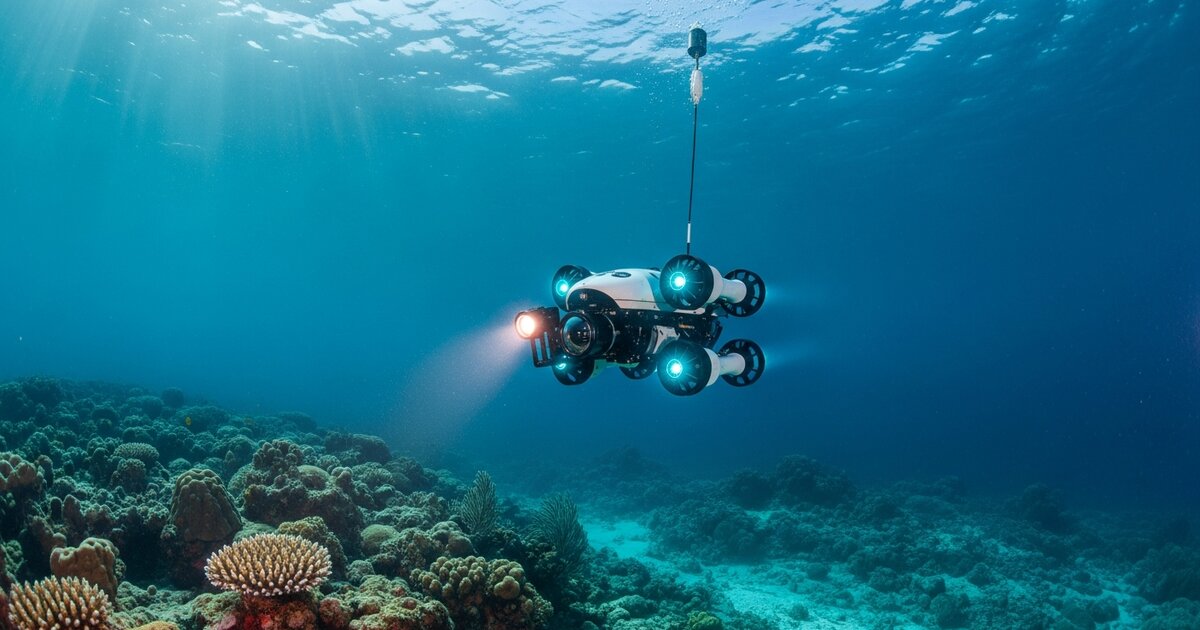
- Thrust replaces wheels. Underwater robots use waterproof thrusters (essentially sealed propeller motors) rather than wheels, and movement in three dimensions (forward/back, up/down, rotation) requires careful thruster placement.
- Tethered control is common. Many beginner ROVs use a physical tether for both power and control signals, since radio communication doesn't travel well through water — Wi-Fi and Bluetooth largely don't work underwater at any meaningful range.
What to Look for in a Beginner Kit
- Pre-sealed electronics enclosure: kits with a professionally designed, pressure-tested enclosure remove the single riskiest DIY element — a custom-built waterproof housing — from your first build.
- Tether length appropriate for your use case: pool use needs much less tether than lake or open water exploration; check this matches your intended environment before buying.
- Depth rating: entry-level kits are typically rated for shallow depths (a few meters); going beyond the rated depth risks water ingress as pressure increases.
- Camera integration: most ROV kits include an onboard camera with a live feed to the surface controller — a near-essential feature, since you generally can't see the robot directly once it's submerged in anything but the clearest, shallowest water.
1. Best Beginner Pick: Pool-Rated ROV Kit
Entry-level kits designed specifically for pool use offer the gentlest introduction: shallow depth rating, simple tethered controller, and a sealed enclosure that doesn't require any DIY waterproofing. This is the right starting point for a first underwater build.
2. Best for Lake/Open Water: Mid-Range ROV with Longer Tether
Stepping up to a kit rated for greater depth and supplied with a longer tether opens up lake, pond, and open-water exploration. These kits typically include more robust thrusters to handle current and a more durable enclosure for less controlled environments.
3. Best for Builders Who Want to Customize: Open-Source ROV Kit
A smaller number of kits are designed explicitly to be modified — open electronics, published enclosure designs (often 3D-printable, see our 3D printer guide), and documented thruster control code. These trade some out-of-the-box polish for the ability to add your own sensors or camera upgrades.
4. Best Sensor Add-on: Waterproof Temperature/Depth Sensor Module
Adding a waterproof pressure (depth) and temperature sensor is a popular first upgrade for hobbyists wanting to log basic environmental data during a dive, rather than only capturing video.
Common Beginner Mistakes
- Skipping a leak test before the first real dive. Submerging the sealed enclosure briefly in a small test container (without expensive electronics installed, if possible) lets you catch a leak before it damages anything important.
- Underestimating buoyancy adjustments. Most kits need fine-tuning with added foam or weight to achieve neutral buoyancy — don't expect it to be perfectly balanced straight out of the box.
- Forgetting strain relief on the tether. A tether that isn't properly secured at the enclosure entry point can transmit pulling force directly to the internal wiring, eventually causing a connection failure or compromising the seal.
- Operating beyond the rated depth "just to see." Pressure increases quickly with depth, and exceeding a kit's rated limit risks a seal failure that may not be obvious until it's too late to recover the electronics.
FAQ
Do underwater robots need a tether, or can they be wireless?
Most beginner and intermediate ROVs use a tether, since radio signals (Wi-Fi, Bluetooth, RF) don't propagate well through water. Some research-grade autonomous underwater vehicles (AUVs) operate untethered using acoustic communication or pre-programmed missions, but this is well beyond beginner kit territory.
How deep can a beginner ROV kit go?
This varies significantly by kit — entry-level pool kits are often rated for just a few meters, while mid-range kits can handle greater depths. Always check (and respect) the manufacturer's rated depth limit rather than assuming based on the enclosure's appearance.
What happens if water gets into the enclosure?
Almost always, it means damaged electronics — water and exposed circuitry don't mix, and even a small leak can short out a board quickly. This is why leak testing before each dive (and especially before the first dive) is so important.
Can I add my own sensors to a beginner ROV kit?
It depends on the kit. Closed, fully-sealed beginner kits are harder to modify without risking the watertight seal. Open-source or modular kits are specifically designed to support added sensors and are the better choice if customization is a priority from the start.
Is underwater robotics much more expensive than land-based robotics?
Entry-level pool ROV kits are roughly comparable in price to a mid-range land robot kit. Costs rise more quickly as you add depth rating, tether length, and additional sensors — open water and deeper-rated equipment carries a real cost premium over pool-only kits.