Best Microcontrollers for Robotics in 2026

Contents1. ESP32: The Modern Standard
The microcontroller is the brain of your robot. It reads sensor data, executes your control logic, and sends PWM signals to motor drivers. Choosing the right one depends entirely on the complexity of your build.
Some articles include recommended robotics gear. We only suggest products we genuinely believe are useful.
1. ESP32: The Modern Standard
For most intermediate robotics projects, the ESP32 is the undisputed champion. It features dual cores, built-in Wi-Fi and Bluetooth, and a high clock speed, all while remaining compatible with the Arduino IDE. It is perfect for remote-controlled chassis and IoT integration.
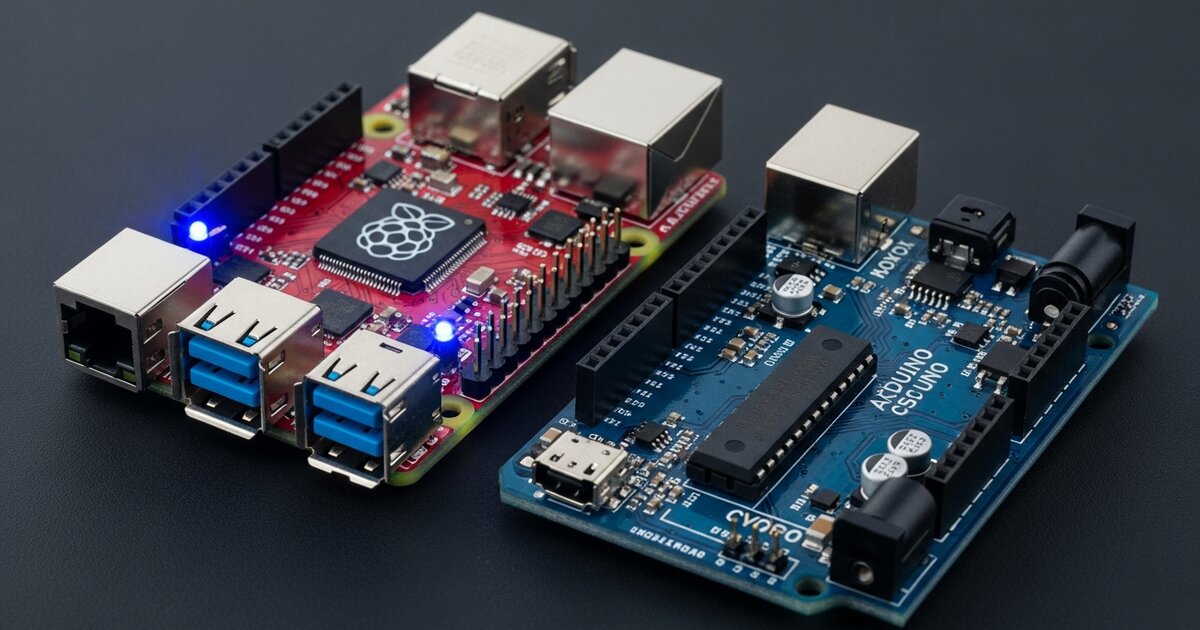
2. Arduino Uno R4 / Mega: The Educational Workhorses
If you are completely new to robotics, as discussed in our Robotics 101 guide, the Arduino ecosystem is still the best place to start. The massive community and thousands of libraries make troubleshooting hardware issues much easier.
3. Raspberry Pi 5: When You Need a Real OS
A Raspberry Pi is not technically a microcontroller; it's a single-board computer (SBC). You need an SBC when you are running an operating system (like Linux) to handle complex tasks like computer vision or ROS 2 navigation.
4. STM32: For Precision Control
When you need hard real-time performance for complex kinematic calculations (like balancing a bipedal robot or controlling a drone), ARM Cortex-M based boards like the STM32 provide the necessary clock speeds and interrupt handling.
Recommended Gear
Dual-core 240 MHz with built-in Wi-Fi and Bluetooth. The go-to microcontroller for intermediate robotics projects and IoT-connected builds.
The latest revision of the classic Arduino Uno — now with a 32-bit Renesas RA4M1 core, onboard Wi-Fi, and a 12×8 LED matrix. Perfect for beginners stepping up.
A full Linux single-board computer. Required when running ROS 2, computer vision pipelines, or any task that demands a real operating system.
Affiliate disclosure: RoboTechJournal participates in the Amazon Services LLC Associates Program and other affiliate programs. We may earn a small commission when you buy through our links — at no extra cost to you. We only recommend products we have researched or used.